
When people think about drinking water, most of them only care about Whether it looks clear or not. If it looks clean, they usually think it’s safe. But the truth is, water that looks clean cab still be harmful to drink. This is because water can have things in it that you can’t see, which can be bad for your health.
One of the most important things to check in water is TDS, which stands for Total Dissolved Solid. But TDS is not the only thing you should know about. There are many other hidden factors in water that most people don’t think about, and they can make a big difference to your health.
In this blog, we’ll explore what TDS is, why it is important, and also talk about other important water quality factors like pH level, hardness, and contaminants such as fluoride, nitrate, and heavy metals.
1. What is TDS in Water?
TDS means Total Dissolved Solids, which refers to the total amount of minerals, salts, and metals that are mixed into the water. This includes:
- Calcium and Magnesium – good for your bones and teeth, but too much can make water “hard.”
- Sodium – important in small amounts, but too much is bad for blood pressure.
- Chlorides and Sulfatos – can affect the taste of water.
- Iron, Zinc, Copper – essential minerals, but in excess they can be harmful.
TDS is measured in milligrams per litre (mg/L) or parts per million (ppm).
2. How Much TDS is Good for Drinking Water?
The Bureau of Indian Standards (BIS) and World Health Organization (WHO) give some guidelines for TDS:
- Below 300 mg/L → Excellent quality water.
- 300 – 500 mg/L → Good quality water.
- 500 – 900 mg/L → Fair, but not ideal for drinking every day.
- Above 900 mg/L → Poor quality; may cause health issues.
Important Tip: Extremely low TDS (below 50 mg/L) is also not good because water will lack essential minerals your body needs.
3. Why is TDS Important?
- Taste of Water – High TDS can make water taste salty, bitter, or metallic.
- Health effects – Too much sodium or heavy metals can cause long-term health problems like kidney issues, high blood pressure, or joint pian.
- Appliance life – Hard water (high TDS) can damage kettles, geysers, and water purifiers faster.
4. Other Hidden Factors in Water Quality
TDS is important, but it is not the only thing to check. Let’s look at other equality important water parameters.
a) pH Level
The pH of water shows if it’s acidic, neutral, or alkaline. The pH scale runs from 0 to 14:
- pH 7 → Neutral (best for drinking).
- Below 7 → Acidic (can corrode pipes and harm teeth).
- Above 8.5 → Alkaline (can taste bitter and cause digestion problems).
b) Hardness of Water
Hardness is caused by excess calcium and magnesium in water.
- Soft water → Less than 75 mg/L hardness.
- Moderately hard water → 75–150 mg/L.
- Hard water → Above 150 mg/L.
Hard water is not always bad for health, but it can cause scale buildup in appliances, reduce soap lather, and make hair rough after washing.
c) Microbial Contamination
Even if water looks clear, it might contain bacteria, viruses, and parasites. These can cause diseases like cholera, typhoid, or diarrhea. This is why boiling water or using a UV purifier is important in areas with unsafe water supply.
d) Fluoride Content
Fluoride in small amounts is good for teeth, but too much can cause fluorosis, which affects bones and teeth.
- Ideal fluoride level: 0.7–1.2 mg/L.
- Above 1.5 mg/L can be harmful in the long run.
e) Nitrate Levels
High nitrate in water can be dangerous, especially for infants, as it can cause a condition called blue baby syndrome.
- Ideal nitrate level: Below 45 mg/L.
f) Heavy Metals
Some harmful metals like lead, arsenic, mercury, and cadmium can enter water through old pipes, industrial waste, or polluted groundwater.
- Even small amounts of these metals can be toxic and cause kidney damage, nerve problems, and cancer.
5. How to Test your Water Quality at Home
You can check your water quality in two different ways:
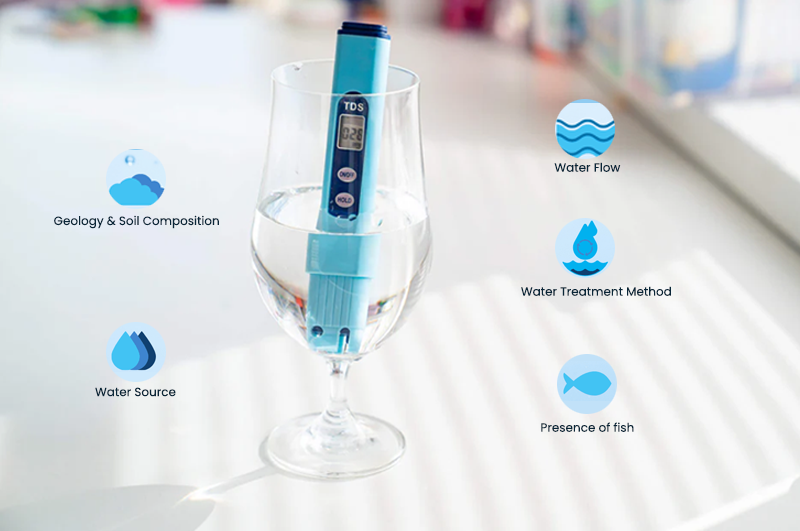
- Using TDS meter — This small device gives instant TDS readings.
- Water testing kits — Available in the market to check pH, hardness, and contaminants.
- Government water testing labs — Many cities offer free or low-cost water testing.
6. How to Improve Your Drinking Water Quality
- RO Purifiers → Good for reducing high TDS but can also remove healthy minerals.
- UV Purifiers → Good for killing bacteria and viruses.
- Activated Carbon Filters → Improve taste and remove chemicals like chlorine.
- Boiling → Works for killing germs but does not reduce TDS or chemical pollutants.
If your water has low TDS after using RO, you can use a mineral cartridge to add back some of the healthy minerals.
7. Lesser-Known Facts About Water Quality
- Rainwater has almost zero TDS, but it can absorb dust and pollutants from the air.
- Bottled water is not always safe — always check the manufacturing date and BIS certification.
- Water pipes can contaminate water if they are old or rusty, even if the water source is clean.
- Seasonal changes affect water quality — in summer, TDS can rise because of evaporation; in monsoon, bacterial contamination risk increases.
8. Why People Ignore These Factors
Many people believe that “clear water is equal to safe water,” but this is not true. Things like TDS, pH, and heavy metals aren’t visible, but they can be more harmful than dirt you see. The main reason people don’t pay attention on these factors is because they can’t be aware of them and don’t their water regularly.
Conclusion
Most of us think water is safe just because it looks clean, but that’s not always true. Clear water can still have hidden risks. Things like total dissolved solids, pH levels, water hardness, and harmful substances like fluoride, nitrates, and heavy metals all affect how safe the water really is. Even if water looks fine, harmful microbes can make it dangerous to drink. Over time, being exposed to unsafe levels of these elements can cause serious health problems, including kidney issues, high blood pressure, stomach troubles, and even deadly diseases. That’s why it’s important to test your water regularly. It’s not just about how it tastes, but about keeping your health safe. Using the right kind of water purifier, like reverse osmosis, UV treatment, or activated carbon filters, can help you get clean, safe drinking water. Remember, water is essential for life, and its quality has a big impact on your health. Don’t wait for signs of contamination to show up, check your water, test it, and take steps to protect it today.