
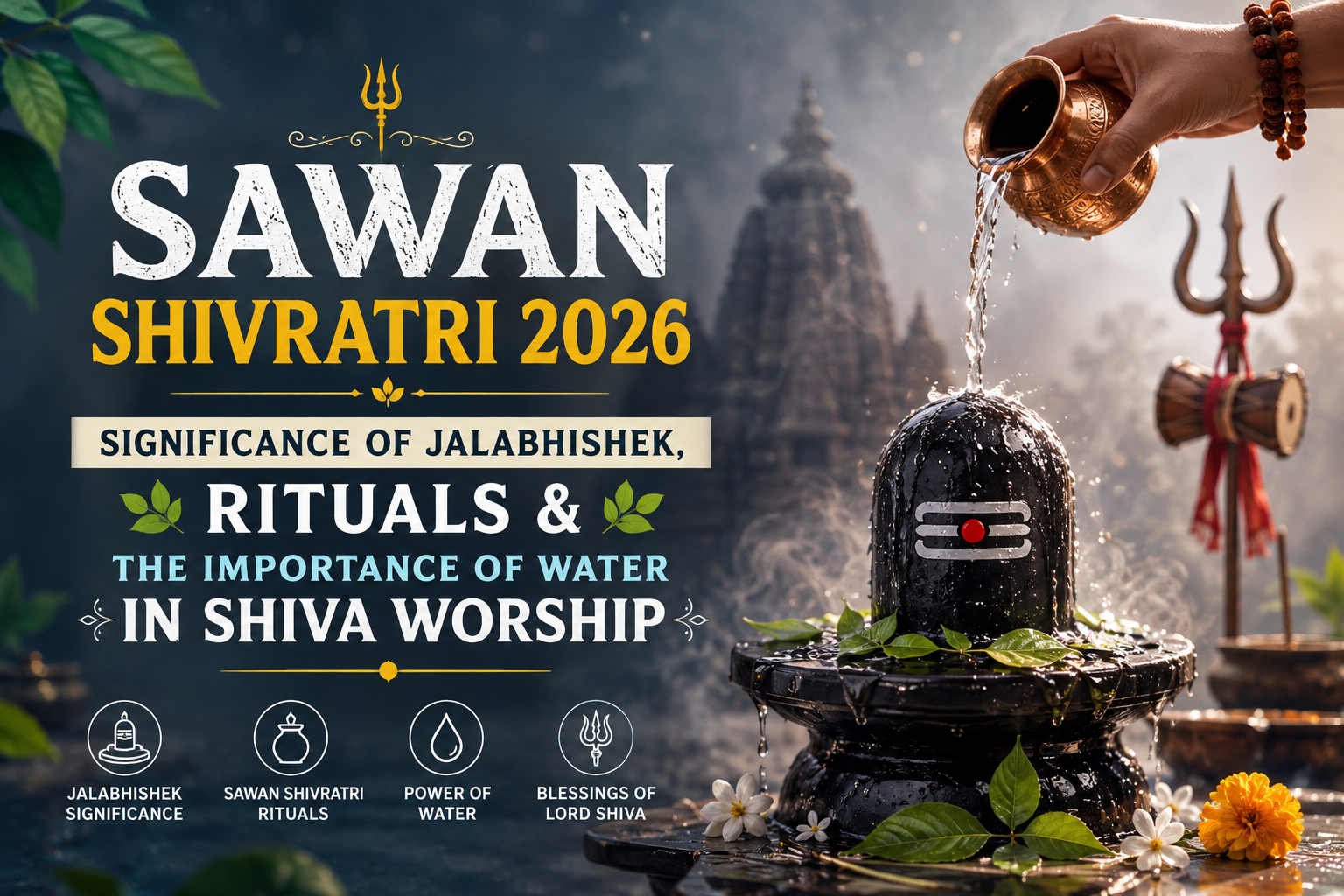
Sawan Shivratri 2026 will be observed on Tuesday, August 11, 2026. It is one of the important occasions during the holy month of Sawan (Shravan), when devotees of Lord Shiva observe fasting, offer prayers and perform rituals such as Jalabhishek. According to the Hindu calendar, the Krishna Paksha Chaturdashi tithi associated with Sawan Shivratri begins on August 11 and ends in the early hours of August 12.
For devotees, Sawan Shivratri is a time for prayer, devotion, self-discipline and spiritual reflection. Among the various traditions associated with this festival, offering water to the Shivling, known as Jalabhishek, holds a special place.
But why is water so important in Shiva worship? What is Jalabhishek, and how is it traditionally performed? Let us explore the significance of this beautiful tradition.
When Is Sawan Shivratri 2026?
Sawan Shivratri will fall on August 11, 2026 (Tuesday). The festival occurs during the Krishna Paksha Chaturdashi of the Hindu month of Shravan. The night is particularly significant for Shiva devotees, with many people visiting temples, observing fasts, chanting prayers and performing Shiva Puja.
The exact Puja and Nishita Kaal timings can vary depending on the location, so devotees should check a local Panchang for the most accurate timings.
What Is Sawan Shivratri?
Sawan Shivratri is a sacred occasion dedicated to Lord Shiva, particularly significant during the month of Sawan. The entire month is associated with Shiva worship, and devotees across India participate in different religious practices during this period.
On Sawan Shivratri, devotees may observe a fast, visit Shiva temples, chant mantras such as “Om Namah Shivaya,” offer flowers and Bilva leaves, and perform Abhishek of the Shivling.
The festival is not only about rituals. For many devotees, it represents an opportunity to slow down, pray, practise self-discipline and reconnect with their spiritual beliefs.
Why Is Water Important in Shiva Worship?
Water has a deep cultural and spiritual significance in Indian traditions. It is commonly associated with purity, cleansing and devotion.
In Shiva worship, water is traditionally offered over the Shivling as part of Jalabhishek. Devotees pour water over the Shivling while offering prayers and chanting Shiva mantras.
The simplicity of water is part of what makes Jalabhishek meaningful. A devotee does not necessarily need elaborate offerings to express devotion. Water, flowers, Bilva leaves and sincere prayers can form part of a simple worship practice.
This connection between water and devotion makes Sawan Shivratri particularly meaningful from a cultural perspective.
What Is Jalabhishek?
The word Jalabhishek can be understood as the ritual offering or pouring of water over the Shivling.
During Shiva Puja, devotees traditionally pour water over the Shivling while praying to Lord Shiva. Some traditions may also include other offerings such as milk, Bilva leaves, flowers and other items according to local customs and family traditions.
Jalabhishek is often performed in Shiva temples as well as at home shrines. During Sawan Shivratri, temples can receive large numbers of devotees who come to offer water and seek blessings.
How Is Shivling Jalabhishek Traditionally Performed?
The exact method can differ according to regional and family traditions, but a simple worship sequence may include:
- Clean yourself and the place of worship before beginning Puja.
- Prepare clean water and other traditional Puja items.
- Offer water over the Shivling with devotion.
- Offer Bilva leaves and flowers according to your tradition.
- Chant “Om Namah Shivaya” or other Shiva prayers.
- Light a diya and offer your prayers.
- Spend a few moments in peaceful meditation or reflection.
Devotees who are following specific religious traditions should follow the guidance of their family priest, temple or local customs.
What Else Is Offered to Lord Shiva?
Apart from water, different Shiva worship traditions may include offerings such as:
- Bilva (Bel) leaves
- Flowers
- Milk
- Curd
- Honey
- Fruits
- Sandalwood
- Incense
- Diyas
The specific offerings and Puja procedures can vary by region and tradition. The most important element for many devotees is the sincerity and devotion behind the worship.
Why Clean Water Matters During Religious Gatherings
Sawan Shivratri is not limited to individual prayer. Across India, temples, religious organizations, community groups and local committees may organize Bhandaras, religious gatherings and public events during the Sawan season.
Such gatherings can bring together hundreds or even thousands of people. In these situations, access to convenient drinking water becomes an important practical requirement.
For organizers, packaged drinking water can be useful because bottles are easy to distribute among volunteers, visitors and participants. Different bottle sizes can also be selected depending on the type and scale of an event.
Whether it is a temple gathering, Bhandara, religious function, community program or another large event, planning drinking-water requirements in advance can help organizers manage hydration more efficiently.
Bestone Water for Bulk Drinking Water Requirements
Bestone Water provides packaged drinking water solutions for bulk requirements, events, weddings, hotels, restaurants, offices, institutions and other business or organizational needs.
For religious gatherings and community events, organizers can consider packaged drinking water in suitable bottle sizes based on their expected attendance and distribution requirements.
Bestone Water offers multiple packaged drinking water options designed to support different bulk requirements.
If you are organizing a Sawan Shivratri gathering, Bhandara, temple event or religious program, planning your drinking-water supply in advance can help ensure that visitors and participants have convenient access to packaged drinking water.
Sawan Shivratri 2026: A Celebration of Faith and Devotion
Sawan Shivratri brings together several meaningful traditions—prayer, fasting, temple visits, chanting and Jalabhishek. Among them, the offering of water to Lord Shiva represents a simple yet powerful expression of devotion for many worshippers.
Water is essential to life, and its role in religious traditions across India also carries deep cultural meaning. Sawan Shivratri provides an opportunity to appreciate both the spiritual and practical importance of water.
As devotees prepare to celebrate Sawan Shivratri 2026, may this sacred occasion bring peace, positivity, strength and happiness to everyone.
Har Har Mahadev! 🔱
Frequently Asked Questions About Sawan Shivratri 2026
When is Sawan Shivratri 2026?
Sawan Shivratri 2026 will be observed on Tuesday, August 11, 2026.
What is Jalabhishek?
Jalabhishek is the traditional practice of offering or pouring water over the Shivling during Shiva worship.
Why is water offered to Lord Shiva?
Water is traditionally associated with purity and devotion in Hindu worship, and offering water to the Shivling is an important part of Shiva Puja and Jalabhishek.
What can be offered along with water?
Depending on regional and family traditions, devotees may offer Bilva leaves, flowers, milk and other traditional Puja items.
Can packaged drinking water be arranged for a Sawan Shivratri event?
Yes. For temples, Bhandaras, religious gatherings and community events, organizers can arrange packaged drinking water in suitable quantities according to the expected number of participants.
Where can I arrange bulk packaged drinking water for an event?
Bestone Water supplies packaged drinking water for bulk requirements, events and organizational needs. Contact the Bestone Water team to discuss your event requirements.
Bestone Water wishes everyone a blessed and peaceful Sawan Shivratri 2026.
Har Har Mahadev! 🔱