
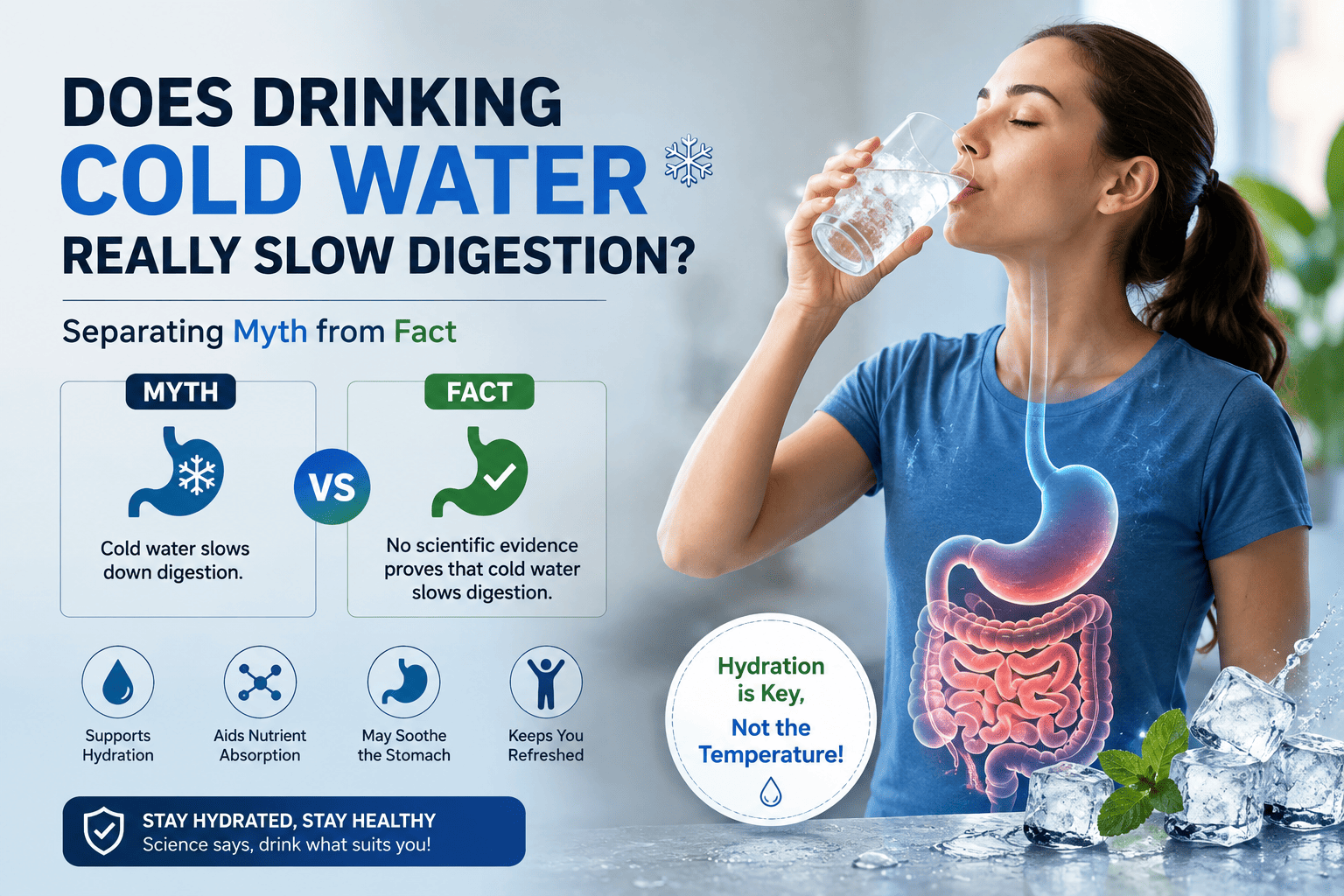
We’ve all heard it at some point—maybe from an elder at the dinner table, a friend who swears by Ayurveda, or a viral social media post: “Don’t drink cold water with your meal—it slows down digestion.” Some versions of this claim go even further, suggesting that cold water solidifies fats in the stomach or even causes long-term health issues.
But how much of this is actually true? Let’s separate myth from fact and look at what science really says about drinking cold water and digestion.
Where Did This Belief Come From?
The idea that cold water hinders digestion has deep roots in traditional medicine systems, particularly Ayurveda and traditional Chinese medicine. In Ayurvedic tradition, cold water is believed to “dampen the fire,” or Agni, which fuels all bodily systems and is considered essential for proper digestion. Ayurvedic practitioners recommend warm or hot water to ease digestion. Similarly, traditional Chinese medicine suggests that drinking cold water with hot food creates an imbalance in the body.
These are ancient practices passed down over thousands of years, and they carry cultural weight. But cultural tradition and scientific evidence are not the same thing—and when it comes to cold water and digestion, the science tells a more nuanced story.
What Does Science Say?
The short answer: There is little to no scientific evidence that drinking cold water is harmful to digestion for most healthy people.
According to experts, there is no scientific evidence that consuming cold beverages is in any way harmful. Health professionals emphasize that staying hydrated is far more important than the temperature of the water you drink. As one gastroenterologist put it, “In healthy people, drinking cold water is not harmful and does not ‘block’ digestion”.
When cold beverages are consumed, the liquid quickly warms to body temperature and has no adverse effect on the way the body digests food. The stomach is a highly dynamic organ with a core temperature of around 37°C (98.6°F), and it is perfectly capable of warming cold liquids to body temperature without any significant disruption to the digestive process.
But Doesn’t Cold Water “Solidify” Fats?
One of the most persistent myths is that drinking cold water after a meal will solidify the fats you’ve just eaten, creating a “sludge” that slows digestion. This claim has been widely debunked. As per the US National Institute of Health, chilled liquids do not solidify ingested fats when the two meet in the stomach. The temperature of your stomach is warm enough to keep dietary fats in their liquid state, and the digestive process continues normally.
Is There Any Truth to the Claim?
While cold water does not “slow digestion” in the way the myth suggests, there are some nuances worth noting:
Cold water may leave the stomach faster. Some research has found that cold water tends to pass through the stomach and into the intestine more quickly than warm water. However, the volume and composition of what you drink have a far greater effect on digestion than temperature.
Cold water may reduce energy intake. A 2020 study published in the European Journal of Nutrition found that consuming water at 2°C reduced energy intake, and this reduction may be related to the modulation of gastric motility. Another study found that energy intake at 2°C was 19% and 26% lower than at 37°C and 60°C, respectively.
Warm water may have benefits for certain individuals. Some research suggests that warm water may promote healthy digestion and lower the risk of constipation. A 2016 study found that drinking warm water after surgery improved intestinal movements. However, more research is needed to confirm these benefits.
Who Should Be Careful with Cold Water?
While cold water is safe for most people, there are specific groups who may want to exercise caution:
- People with achalasia: This rare condition affects the esophagus and makes swallowing difficult. An older 2012 study found that drinking cold water worsened symptoms in people with achalasia, while hot water helped soothe and relax the food pipe. Cold water was found to increase lower esophageal sphincter resting pressure and prolong the duration of esophageal body contraction.
- People with migraine: Some research suggests that drinking ice-cold water can trigger headaches in people with migraine. One study found that participants with active migraine were twice as likely to get a headache after drinking cold water.
- People with sensitive digestion: Some individuals with conditions like irritable bowel syndrome (IBS) or acid reflux may find that cold water exacerbates their symptoms.
The Bottom Line
For the vast majority of healthy people, drinking cold water does not slow digestion in any meaningful or harmful way. The myth likely persists because of cultural traditions and anecdotal experiences, but the scientific evidence does not support it.
In fact, cold water may even offer some benefits. It can help cool your body after exercise, may slightly increase calorie expenditure (though the effect is minimal—about 8 extra calories per cup), and may encourage you to drink more water if you find it more refreshing.
What matters most is not the temperature of your water, but that you drink enough of it. Proper hydration is essential for digestion, nutrient absorption, waste elimination, and overall health.
So the next time someone tells you to skip the ice water with your meal, you can confidently tell them: the science just doesn’t back that up. Drink your water however you enjoy it most—cold, room temperature, or warm—and focus on staying hydrated throughout the day.
At Bestone Water, we’re committed to providing you with clean, safe drinking water and evidence-based health information. Stay hydrated, stay healthy, and drink water the way you like it.