
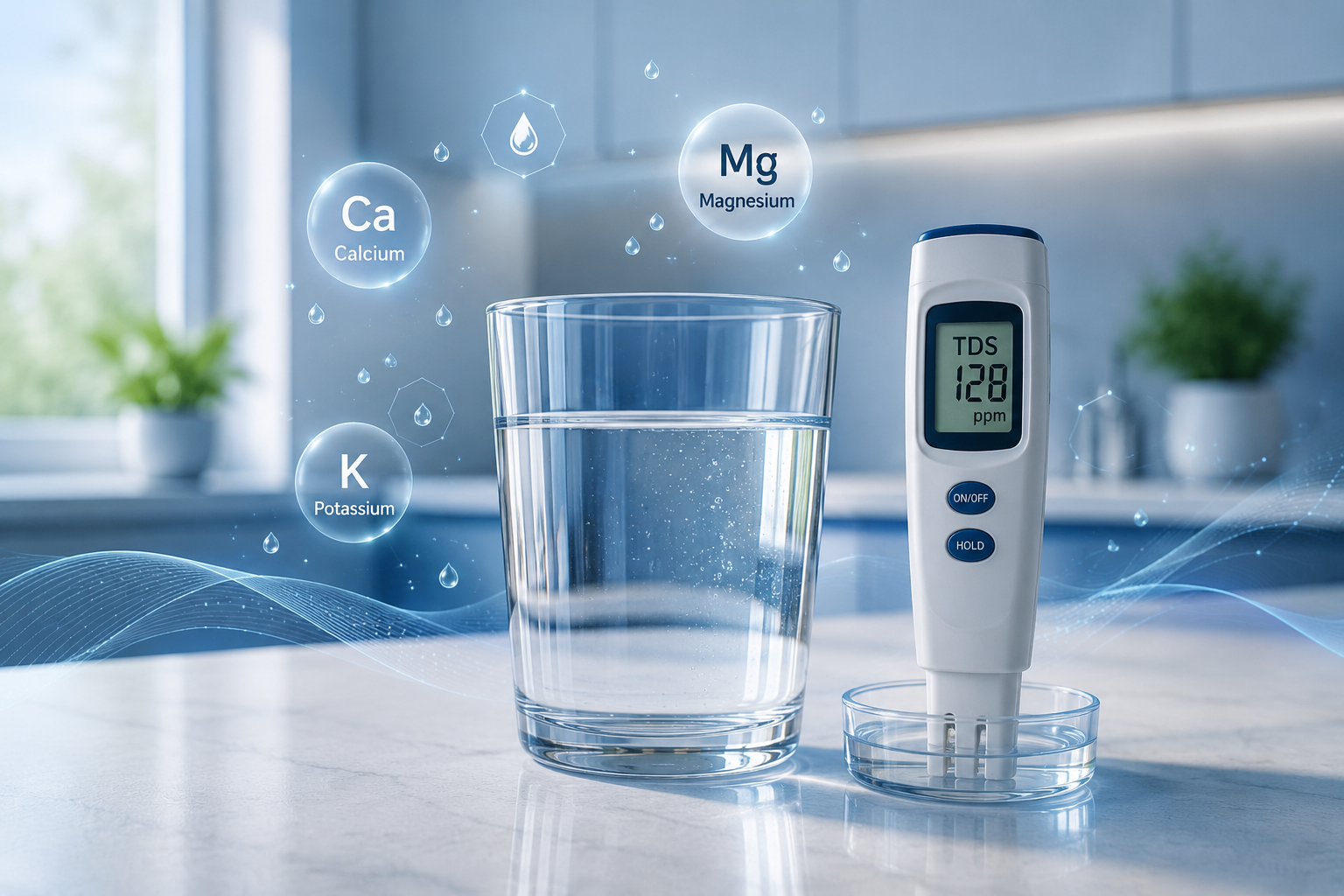
If you have ever shopped for a home water purifier or picked up a bottle of packaged drinking water, chances are you have encountered the term TDS. Sales representatives often carry pen-like meters, dip them into a glass of tap water, and point to a rising three-digit number as proof that your water is impure.
This has created a widespread misconception: the lower the TDS number, the healthier the water, how TDS actually shapes your drinking water.
In reality, water science is far more nuanced. Total Dissolved Solids are not inherently harmful contaminants. Understanding what TDS actually measures, how it affects taste and nutrition, and why “zero TDS” is an unhealthy myth is essential for making informed choices about daily hydration.
What Is TDS in Drinking Water?
Total Dissolved Solids (TDS) refers to the combined total of all organic and inorganic substances dissolved in water, measured in milligrams per liter (mg/L) or parts per million (ppm).
In natural sources like groundwater, springs, and rivers, water dissolves minerals from rocks and soil as it flows.
A typical TDS reading comprises two distinct categories of dissolved matter:
- Beneficial Dietary Minerals: In-organic salts that our bodies require daily, primarily calcium, magnesium, potassium, and sodium, along with carbonates, bicarbonates, chlorides, and sulfates.
- Harmful Contaminants: Heavy metals (such as lead, arsenic, and mercury), agricultural runoff (nitrates, pesticides), and industrial pollutants.
A standard handheld TDS meter cannot differentiate between a molecule of healthy magnesium and a particle of toxic lead; it simply measures the electrical conductivity of the water. High conductivity indicates more dissolved ions, while low conductivity indicates fewer.
The “Zero TDS” Myth: Why Lower Isn’t Always Better
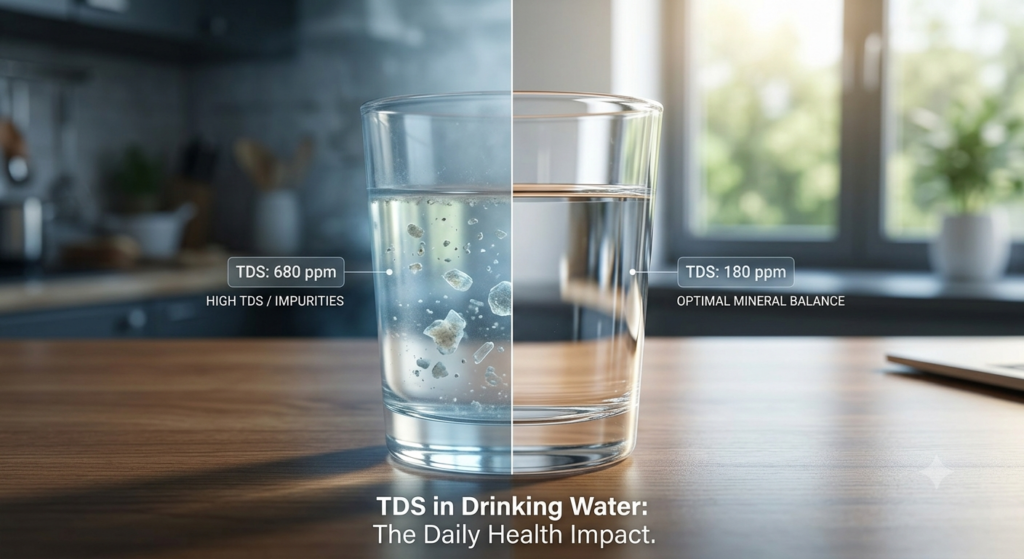
The aggressive marketing of domestic Reverse Osmosis (RO) purifiers has popularized the belief that water should be stripped of everything until the TDS drops near zero. However, consuming demineralized or extremely low-TDS water over extended periods carries notable downsides:
- Lack of Dietary Electrolytes: Drinking water is a natural secondary source of bioavailable calcium and magnesium. Stripping water of all dissolved solids eliminates these essential micronutrients.
- Flat, Unpalatable Taste: Water with very low TDS (below 50 ppm) tends to taste flat, chalky, or bitter. Minerals provide natural freshness and crispness.
- Poor Hydration Absorption: Demineralized water passes through the digestive system quickly without providing the electrolyte balance necessary for cellular hydration, especially in warm climates or during physical exertion.
- Corrosivity: Extremely low-TDS water is slightly acidic and chemically aggressive, meaning it can leach trace metals from containers or plumbing over time.
According to guidelines by the World Health Organization (WHO), optimal drinking water contains a moderate mineral balance rather than being completely devoid of dissolved solids.
Ideal TDS Levels for Drinking Water
Water palatability and health suitability can be broken down into clear TDS ranges:
| TDS Level (ppm / mg/L) | Palatability & Suitability | Health Context |
| Less than 50 | Poor / Flat | Over-purified; lacks essential minerals. |
| 50 – 150 | Good | Light, crisp; suitable for daily drinking if mineral balance is maintained. |
| 150 – 300 | Excellent | Ideal range; optimal balance of taste, crispness, and mineral nutrition. |
| 300 – 500 | Fair to Good | Acceptable; common in natural mineral water sources. |
| 500 – 1,200 | Marginal / Heavy | Safe if free of toxic metals, but may taste saline or hard. |
| Above 1,200 | Unacceptable | Exceeds acceptable palatability; requires advanced filtration. |
Standards set by the Bureau of Indian Standards (BIS IS 10500) state that the desirable limit for TDS in drinking water is 500 mg/L, with a permissible limit extending up to 2,000 mg/L only in the absence of an alternate source.
For packaged drinking water (BIS IS 14543), water is treated to ensure harmful elements are eliminated while retaining or infusing balanced mineral content within the 100–250 ppm window for clean taste and optimal hydration.
Key Health Benefits of Mineral-Balanced Water
Maintaining a balanced TDS level in your daily drinking supply supports several physiological functions:
1. Cardiovascular Health and Blood Pressure
Magnesium plays a critical role in regulating cardiac rhythm, vascular tone, and blood pressure. Studies highlighted in WHO water quality reports suggest that populations consuming water with adequate magnesium show lower incidences of ischemic heart disease.
2. Bone Density and Skeletal Strength
Calcium dissolved in water is absorbed by the human body with bioavailability comparable to—and in some cases better than—calcium found in dairy products. It provides steady supplemental support for maintaining bone mineral density.
3. Digestion and Acid-Base Balance
Naturally occurring bicarbonates in mineralized water act as a mild buffer, helping neutralize excess gastric acidity and promoting smooth digestion after meals.
How Safe Packaged Water Solves the TDS Dilemma
Raw tap or tanker water in urban centers often contains unpredictable TDS levels, frequently contaminated with heavy metals, organic matter, and microbes.
Packaged drinking water manufactured under strict BIS and FSSAI guidelines addresses both safety and mineral balance through a multi-barrier purification process:
- Sand and Carbon Filtration: Removes suspended physical impurities, chlorine, and organic odor compounds.
- Reverse Osmosis (RO) & Demineralization: Strips out dangerous heavy metals, excess fluorides, and micro-contaminants.
- Controlled Mineral Infusion: Carefully reintroduces precise, standardized ratios of food-grade calcium and magnesium salts to bring the TDS to an optimal, healthy range (100–200 ppm).
- Ozonation and UV Sterilization: Ensures microbiological safety without leaving chemical residues or altering the mineral profile.
This process ensures that every bottle delivers water that is free from pathogens and industrial toxins while avoiding the nutritional void of stripped, flat water.
Summary: What to Look for in Your Daily Hydration
When assessing your daily drinking water, keep these rules of thumb in mind:
- Do not chase zero TDS. A reading between 100 and 300 ppm delivers the best combination of safety, taste, and cellular hydration.
- Identify the source and safety standards. High TDS is only safe if you are certain it comes from healthy minerals rather than industrial or agricultural runoff.
- Trust certified processes. Whether for daily household consumption, corporate offices, or large events, choose packaged drinking water that adheres to Bestone Water’s BIS & FSSAI certified packaged drinking water, ensuring consistent purity, microbiological safety, and vital mineral balance.
Hydration is not just about quenching thirst; it is about fueling your body with clean, mineral-rich water that supports long-term wellness.
Related Reads: