
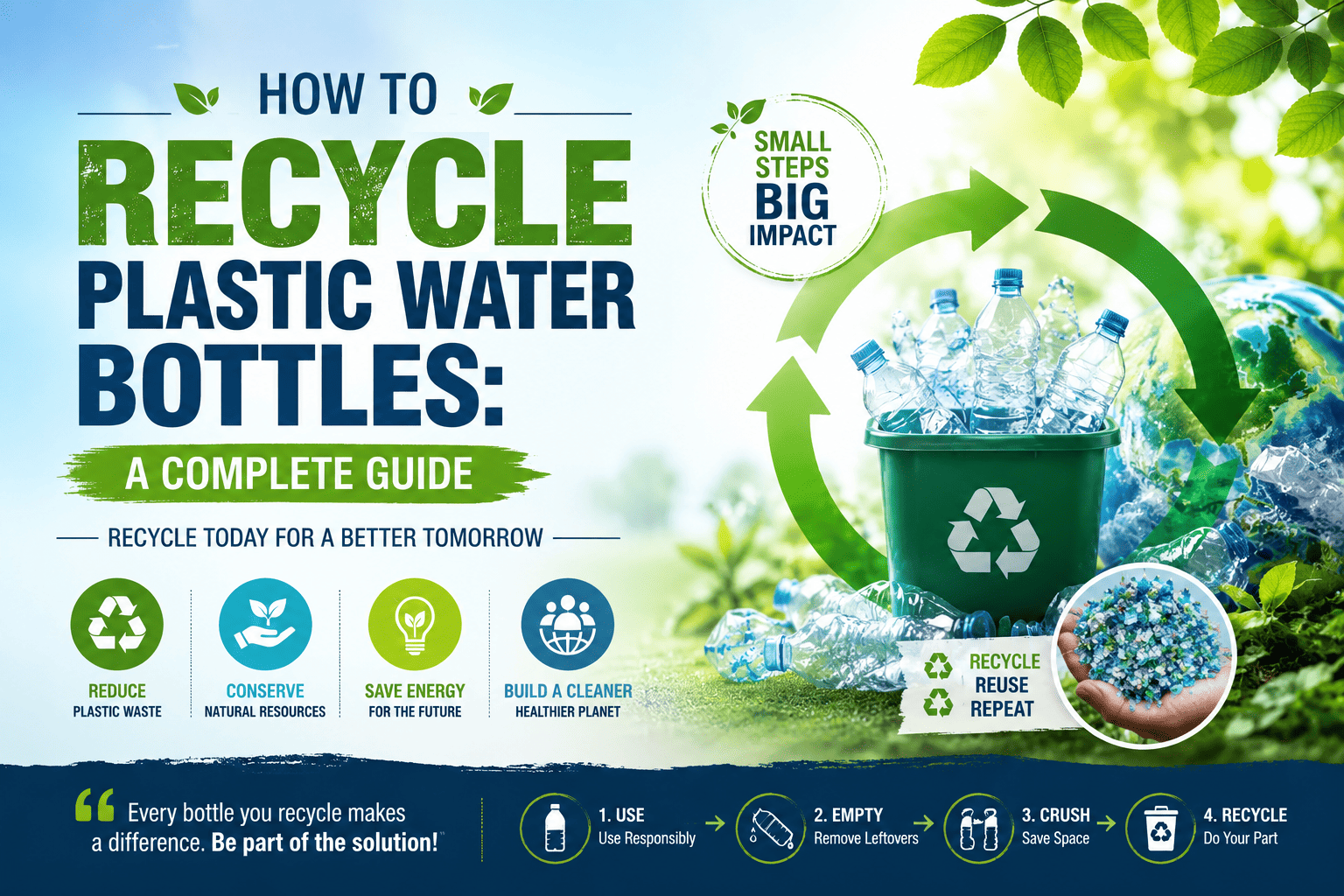
Plastic water bottles are a convenient part of everyday life, but when they are thrown away after a single use, they can contribute to the growing problem of plastic waste. The good news is that many plastic water bottles can be recycled and transformed into useful new products.
Learning how to recycle plastic water bottles correctly is simple. By emptying bottles, preparing them properly, following local recycling rules, and choosing reusable bottles whenever possible, individuals and businesses can help reduce unnecessary plastic waste.
In this guide, we explain how to recycle plastic water bottles, what happens after they are collected, common recycling mistakes to avoid, and how consumers can make more sustainable choices.
Why Should You Recycle Plastic Water Bottles?
Most disposable water bottles are made from plastic designed for beverage packaging, commonly polyethylene terephthalate (PET), identified by resin code #1. PET bottles are widely recyclable, although whether a particular bottle is accepted depends on the recycling system available in your area.
Recycling plastic bottles can provide several benefits:
- Reduces the amount of plastic sent to landfills.
- Helps keep plastic waste out of streets, waterways, and natural environments.
- Reduces the need for virgin plastic materials.
- Allows valuable plastic materials to be used in new products.
- Supports a circular approach to material use.
- Encourages consumers to think more carefully about waste.
Recycling is important, but reducing and reusing should come first whenever practical. The U.S. EPA’s waste-management hierarchy prioritizes reducing consumption and reusing materials before recycling them.
What Type of Plastic Are Water Bottles Made From?
A large number of single-use water bottles are made from PET, or polyethylene terephthalate, which is usually marked with the number 1 inside the recycling triangle.
The resin identification code helps identify the type of plastic used to manufacture a container. However, the presence of a recycling symbol or resin number does not automatically mean that your local recycling program accepts that item. Always check your local recycling provider’s requirements.
Other plastic bottles may be made from different materials, such as HDPE (#2). These plastics have different characteristics and may be processed separately during recycling.
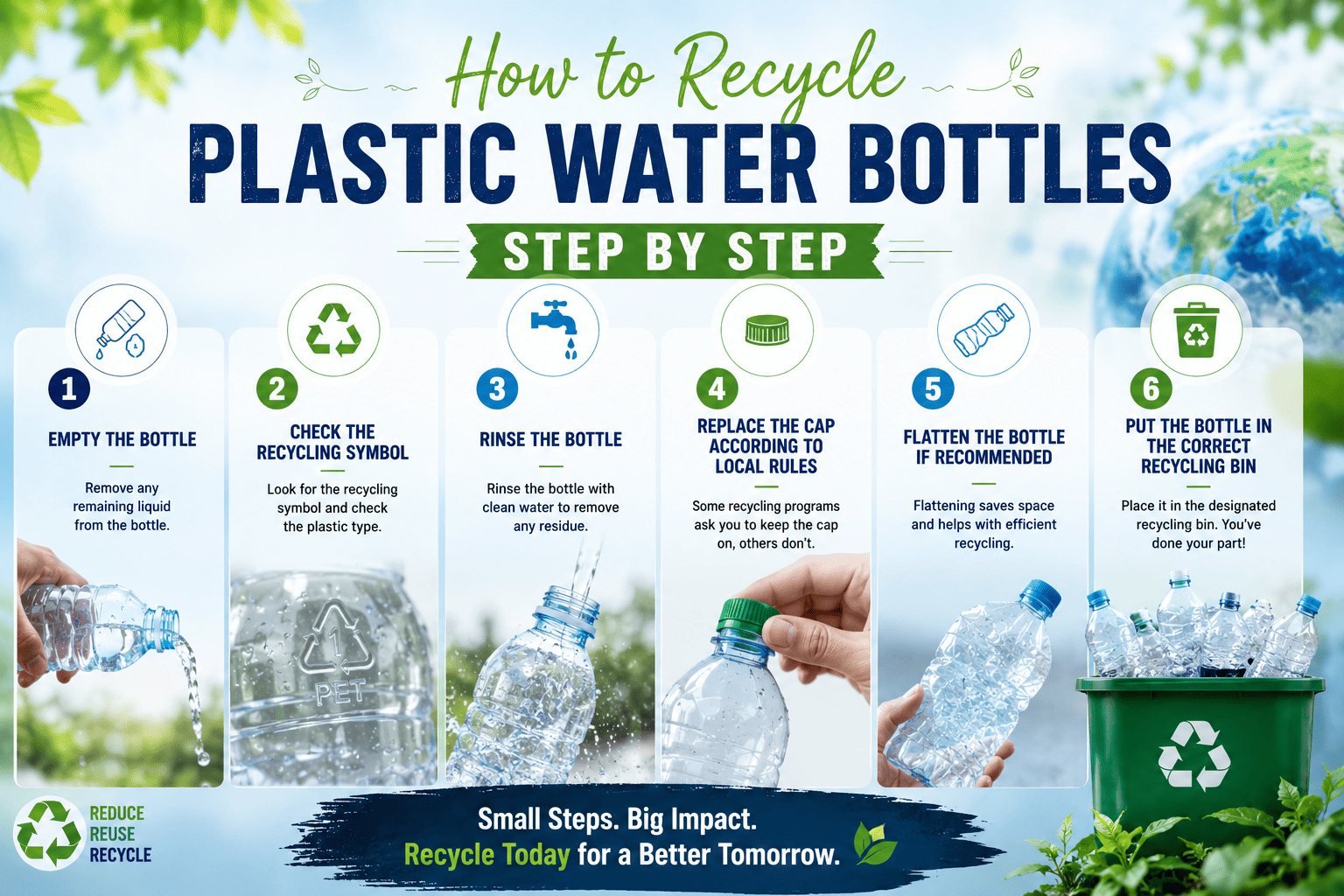
How to Recycle Plastic Water Bottles Step by Step
Recycling a plastic water bottle correctly does not have to be complicated. Follow these basic steps.
1. Empty the Bottle
Before putting a plastic water bottle into a recycling container, make sure it is completely empty.
Pour out any remaining water or beverage. Bottles containing liquids can create problems during collection, transportation, and sorting.
An empty bottle is easier for recycling facilities to process and reduces the possibility of contaminating other recyclable materials.
2. Check the Recycling Symbol
Look at the bottom of the bottle for the resin identification code.
A typical PET water bottle will have a #1 designation. However, recycling acceptance varies by location, so don’t rely on the number alone. Check the requirements of your local recycling program.
3. Rinse the Bottle
If there is residue inside the bottle, give it a quick rinse and allow it to drain.
The goal is not to make the bottle perfectly spotless. The important thing is to remove remaining liquid and significant residue. EPA guidance generally recommends that plastic containers be empty and rinsed clean of food debris before recycling.
For a normal water bottle, a quick rinse is usually sufficient if needed.
4. Replace the Cap According to Local Rules
Recycling instructions for bottle caps have changed over time.
Modern recycling systems can often process bottles with their plastic caps attached. The EPA notes that the Association of Plastic Recyclers recommends leaving caps on containers where local facilities support this process. However, recycling systems vary, so you should follow the instructions provided by your local recycling facility.
If your local recycling program says “caps on,” put the cap back on the bottle before recycling it.
5. Flatten the Bottle if Recommended
Some recycling programs recommend flattening bottles to save space during collection and transportation. Other systems use automated equipment that handles bottles without requiring consumers to flatten them.
Therefore, follow the specific instructions from your local recycling provider.
6. Put the Bottle in the Correct Recycling Bin
Once the bottle is empty and properly prepared, place it in the recycling bin designated for accepted plastic containers.
Do not assume that every plastic item belongs in the recycling bin. Different communities accept different materials, and incorrect items can contaminate recycling loads.
What Happens to Plastic Water Bottles After Recycling?
Have you ever wondered what happens after you place a plastic bottle in a recycling bin?
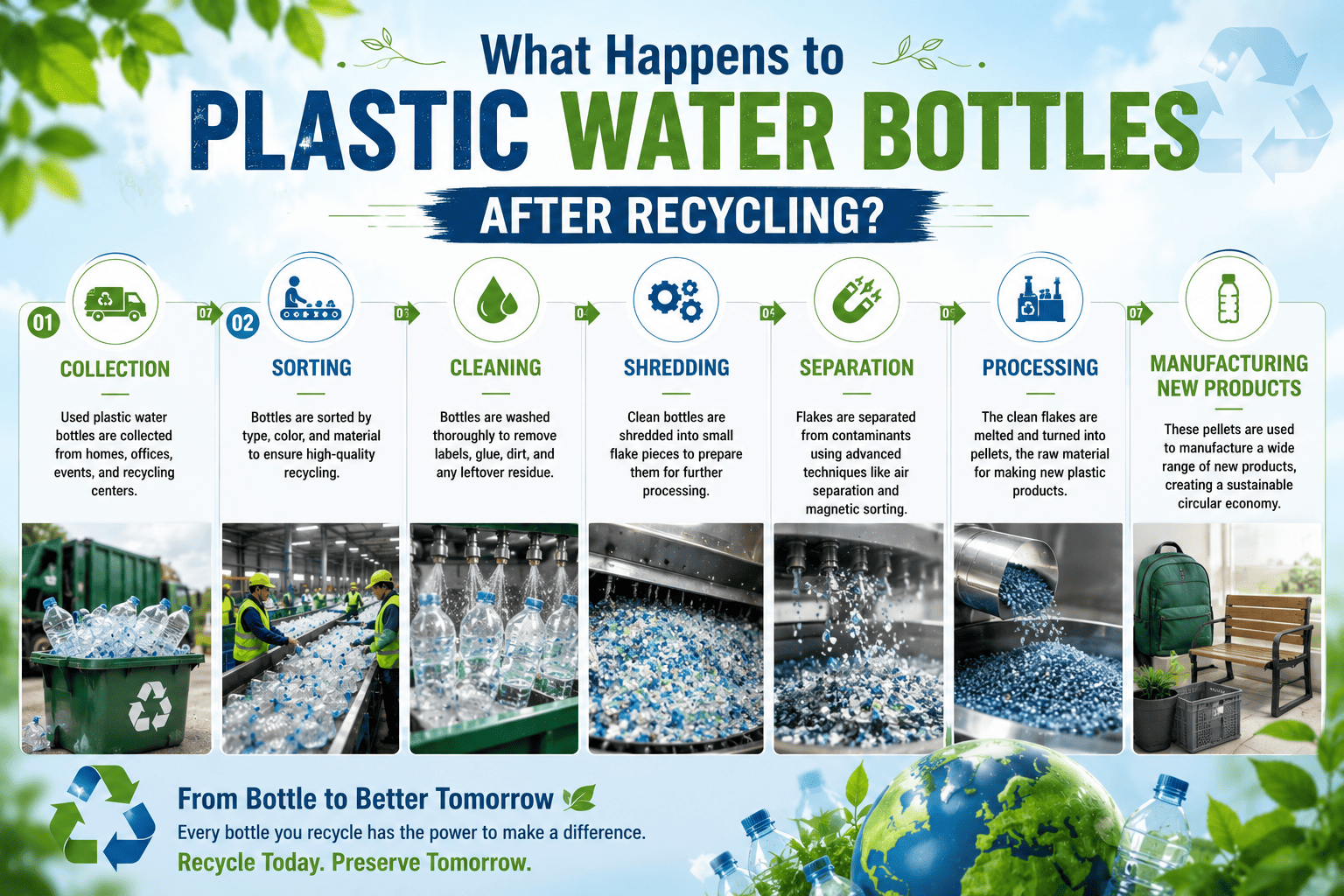
The recycling process generally involves several stages.
Collection
Recycling trucks collect plastic bottles from homes, businesses, public recycling bins, or collection centers.
Sorting
The collected materials are taken to a recycling facility where they are sorted according to material type, plastic type, color, and other characteristics.
Sorting is an important step because different plastics have different properties and may require different processing methods.
Cleaning
The bottles are cleaned to remove dirt, liquids, labels, adhesives, and other contaminants.
Shredding
The plastic bottles are mechanically processed into smaller pieces or flakes.
Separation
Different materials and plastic types can be separated using specialized equipment. For example, plastic flakes may be separated according to their physical characteristics.
Processing
The cleaned plastic is processed into recycled material that can be used to manufacture new products.
Manufacturing New Products
Recycled plastic can become a raw material for various products, including packaging, fibers, textiles, containers, and other plastic goods.
The exact process and end products depend on the type and quality of plastic collected and the capabilities of the recycling facility.
What Can Recycled Plastic Water Bottles Become?
One of the biggest advantages of recycling is that an old bottle does not necessarily have to become waste.
Recycled PET can be used as a raw material for products such as:
- New plastic containers
- Polyester fibers
- Clothing and textiles
- Carpeting
- Packaging materials
- Industrial products
- Other plastic items
EPA resources note that recycled plastics can be processed into new products, while separating plastic by type helps manufacturers produce higher-quality recycled materials.
Common Mistakes to Avoid When Recycling Plastic Bottles
Even when people have good intentions, recycling mistakes can reduce the effectiveness of the recycling process.
Putting Full Bottles in the Recycling Bin
Never place a bottle containing a significant amount of liquid into a recycling bin. Empty it first.
Assuming Every Plastic Is Recyclable
A plastic product can have a resin identification number without being accepted by your local recycling program. Always check local guidelines.
Recycling Dirty Containers
Food, beverage residue, and other contaminants can interfere with recycling. Empty and rinse containers as required by your local program.
Putting Plastic Bags in the Bottle Recycling Bin
Plastic bags and films are often handled through different recycling systems and may not belong in household recycling bins. Check with your local recycling provider for the appropriate disposal method.
Recycling Compostable Plastics With Conventional Plastics
Compostable plastics are not intended to be mixed with conventional plastic recycling streams because they can contaminate or disrupt the recycling process.
Assuming the Recycling Symbol Guarantees Recycling
The number inside the recycling triangle identifies the resin type; it does not guarantee that your local facility accepts the item.
Can You Reuse a Plastic Water Bottle?
Reusing a plastic bottle for a short period may seem like a simple way to reduce waste, but disposable bottles are generally designed for their intended use rather than indefinite reuse.
For everyday hydration, a durable reusable water bottle is usually a better long-term option. The EPA recommends using reusable water bottles or thermoses instead of disposable bottles as one way to reduce plastic waste.
If you regularly purchase bottled water, consider carrying a reusable bottle and refilling it where safe and practical.
Recycling vs. Reusing vs. Reducing
When it comes to plastic waste, recycling is only one part of the solution.
Reduce
The best way to deal with waste is often to avoid creating it in the first place. For example, choose reusable bottles instead of purchasing multiple single-use bottles when practical.
Reuse
Reusable bottles and containers can reduce the number of disposable products you consume.
Recycle
When a plastic bottle can no longer be reused and your local recycling program accepts it, recycle it correctly.
A simple approach is:
Reduce → Reuse → Recycle
This approach can help minimize the amount of plastic entering the waste stream.
How Businesses Can Recycle More Plastic Water Bottles
Businesses, offices, hotels, schools, restaurants, and events can generate a large number of plastic bottles. Establishing a simple recycling system can make a significant difference.
Businesses can:
- Place clearly labeled recycling bins in convenient locations.
- Keep recycling bins near areas where bottled water is consumed.
- Educate employees about what belongs in each bin.
- Work with an authorized local recycling or waste-management provider.
- Track the amount of plastic collected.
- Encourage employees and visitors to use reusable water bottles where practical.
- Reduce unnecessary single-use packaging.
Clear signage is particularly useful because people are more likely to recycle correctly when instructions are simple and visible.
How Consumers Can Reduce Plastic Bottle Waste
Recycling is valuable, but reducing the number of disposable bottles we use can have an even greater impact.
Here are some practical habits:
- Carry a reusable water bottle.
- Refill your bottle instead of buying multiple small bottles.
- Choose larger containers when appropriate to reduce packaging per serving.
- Avoid buying bottled water when safe drinking water is readily available.
- Recycle accepted bottles after use.
- Encourage family members, coworkers, and friends to recycle correctly.
- Look for products that contain recycled plastic.
- Learn the recycling rules in your local area.
The EPA similarly recommends reusable bottles, reducing packaging, and choosing recycled-content products as ways to reduce plastic waste.
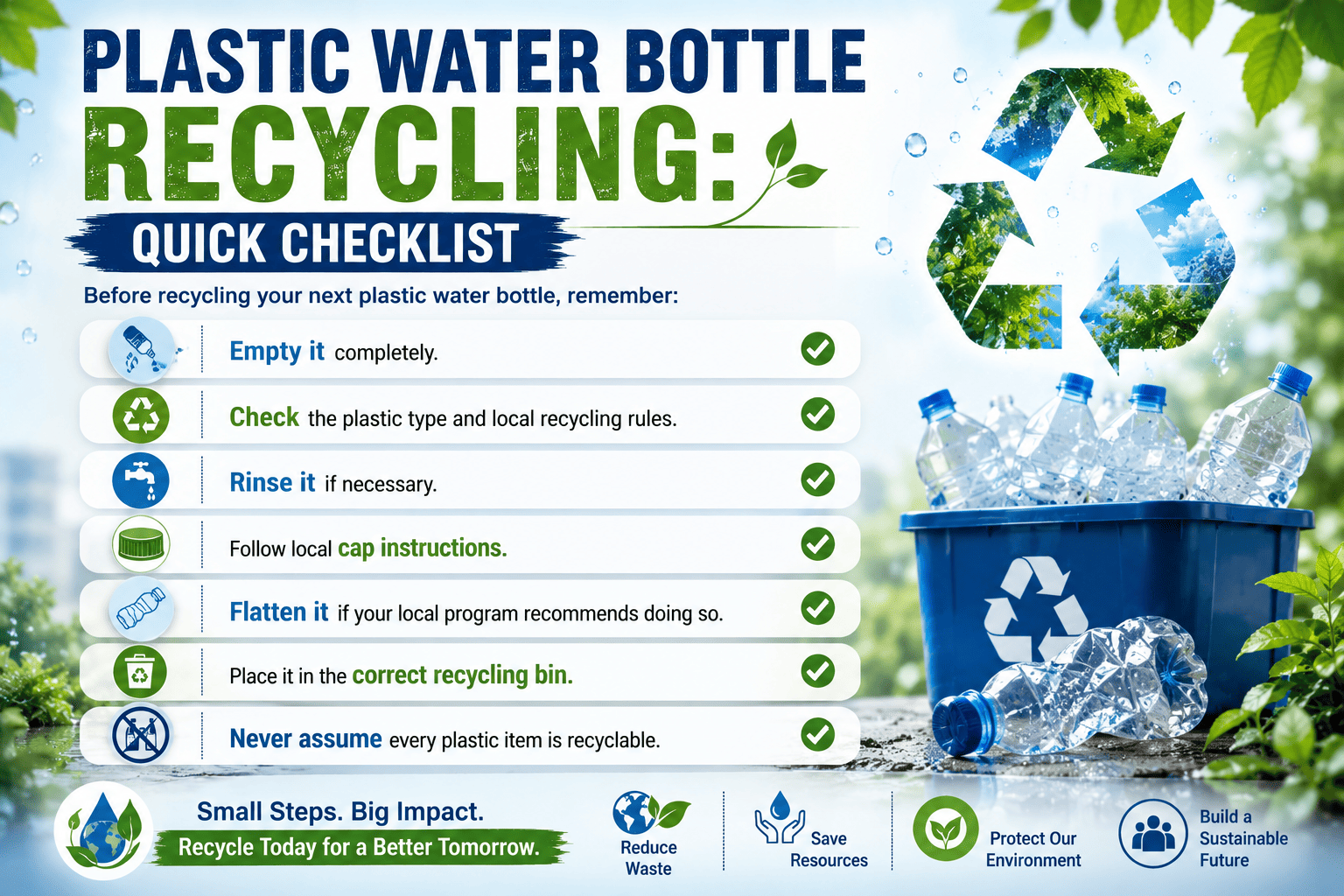
Plastic Water Bottle Recycling: Quick Checklist
Before recycling your next plastic water bottle, remember:
- Empty it completely.
- Check the plastic type and local recycling rules.
- Rinse it if necessary.
- Follow local cap instructions.
- Flatten it if your local program recommends doing so.
- Place it in the correct recycling bin.
- Never assume every plastic item is recyclable.
Frequently Asked Questions (FAQ)
Yes, many plastic water bottles are recyclable, particularly PET (#1) bottles. However, acceptance depends on your local recycling program, so always check local guidelines.
Not necessarily. Many modern recycling systems can process bottles with caps attached, but policies vary. Check your local recycling provider’s instructions.
The bottle should be empty, and if there is residue, it should generally be rinsed clean according to your local recycling requirements.
Recycled PET can be processed into material for new products, including certain containers and packaging, depending on the recycling and manufacturing system.
No. The resin identification number tells you what type of plastic the item is made from. It does not guarantee that your local recycling facility accepts it.
Recycling helps manage plastic waste, but reducing consumption and reusing products are generally preferred when practical. A reusable water bottle can reduce the number of single-use bottles you need to purchase.
Final Thoughts
Learning how to recycle plastic water bottles is a small but meaningful step toward better waste management. The process starts with simple actions: empty the bottle, prepare it according to local guidelines, place it in the correct recycling stream, and avoid contaminating recyclable materials.
At the same time, recycling should not be the only goal. Reducing unnecessary single-use plastic and switching to reusable bottles where practical can help prevent waste before it is created.
Whether you are recycling one bottle at home or managing hundreds of bottles at a workplace or event, making informed choices can help build better habits around plastic consumption and disposal.
For more information about bottled water and water-related products, visit Bestone Water and explore its range of water solutions.
Start with one bottle. Recycle it correctly. Then make the next sustainable choice.