
You’ve probably done it without thinking twice — left a bottle of water in the car on a hot afternoon, or carried one around all day in your bag while running errands under the sun. Later, when you finally take a sip, the water tastes a little “off.” Maybe it’s warmer than expected, or there’s a faint plastic-y smell.
Is that just in your head, or is something actually changing inside the bottle?
The short answer is: yes, something does change. Heat and sunlight can affect both the taste and, in some cases, the safety of water stored in plastic bottles. Let’s break down exactly what happens, why it happens, and what you can do to make sure the water you drink stays as clean and safe as the day it was packaged.
Why Heat and Sunlight Matter for Bottled Water
Packaged drinking water bottles are usually made from a plastic called PET (Polyethylene Terephthalate). PET is considered safe for food and beverage packaging, and it’s what most branded water bottles — including Bestone Water — are made from. However, like most plastics, PET isn’t completely unaffected by heat.
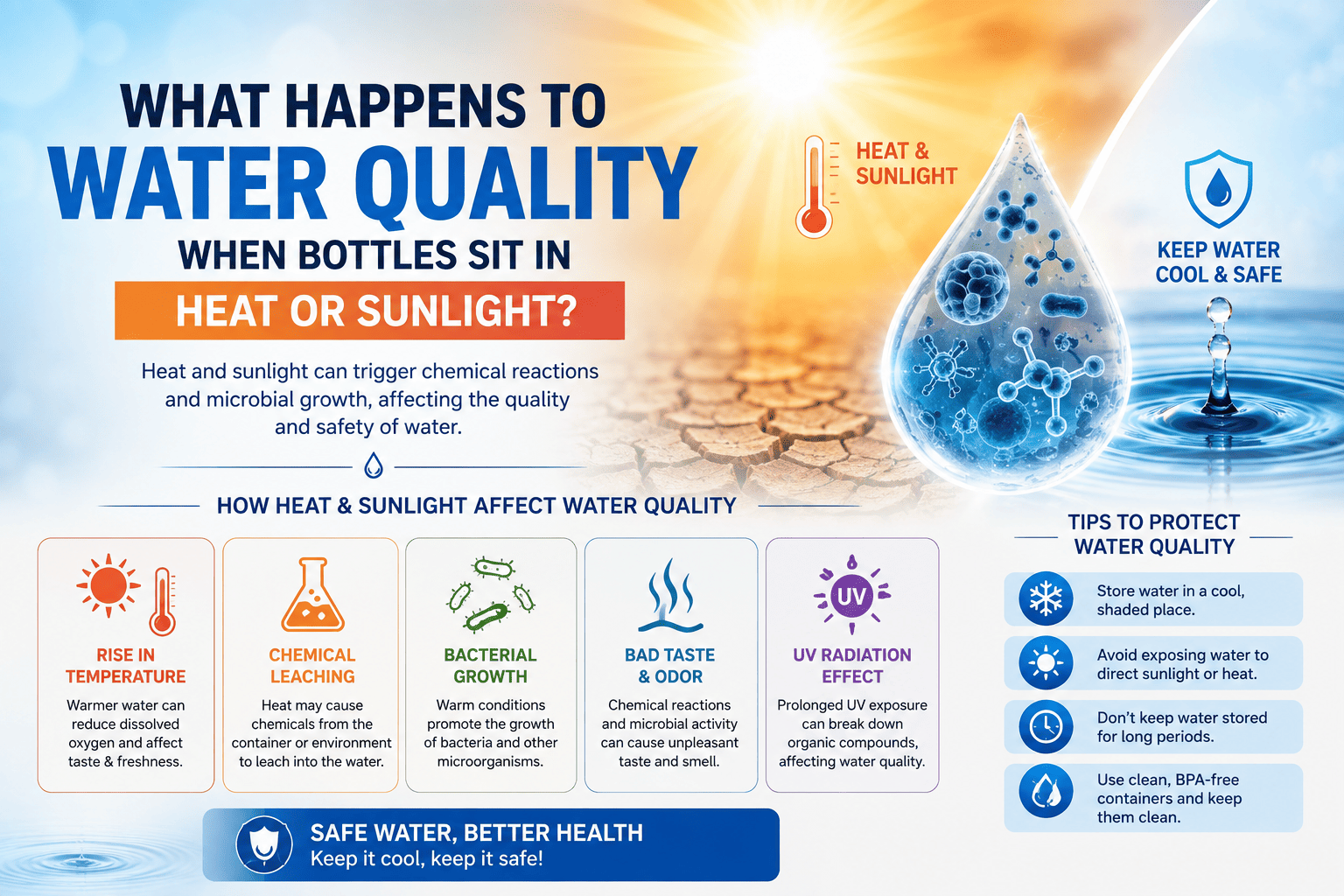
When a plastic bottle is exposed to high temperatures — say, sitting in direct sunlight, inside a parked car, or near a heat source — two things start happening at a chemical level:
- The plastic becomes slightly more reactive. Heat speeds up chemical reactions. This includes the very slow, very small release of certain compounds from the plastic into the water.
- The water inside heats up too, which can make it a more favorable environment for bacteria to grow, especially if the bottle has already been opened.
Neither of these effects is instant or dramatic. A bottle sitting in the sun for twenty minutes isn’t going to turn into a health hazard. But repeated exposure, high temperatures, or long durations can add up.
Does Plastic Actually Leach Chemicals Into the Water?
This is the question most people are really asking. The answer is: in very small amounts, yes — and it’s a well-studied topic.
Research has looked at compounds like antimony trioxide, which is used as a catalyst in manufacturing PET plastic. Under normal storage conditions, the amount of antimony that can migrate into water is far below safety limits set by health authorities. However, studies have shown that when PET bottles are stored at higher temperatures for extended periods — think weeks in a hot warehouse or a car trunk during peak summer — the migration rate increases.
The levels involved are still generally within the safe limits defined by food safety regulators. But “within limits” doesn’t mean “no change at all.” This is why manufacturers recommend storing bottled water away from direct heat and sunlight, even though a properly sealed, unopened bottle is designed to handle normal transport and shelf conditions.
There’s also a difference between:
- Short-term heat exposure (like a bottle in your bag for a few hours) — minimal to no meaningful impact.
- Long-term heat exposure (like bottles stored in a hot godown, truck, or under direct sun for days or weeks) — this is where quality can genuinely start to decline.
Sunlight Adds Another Layer: UV Exposure
Beyond just heat, direct sunlight brings UV (ultraviolet) radiation into the picture. UV light can gradually degrade plastic over time, a process called photodegradation. This is the same reason plastic patio furniture or car dashboards become brittle and discolored after years in the sun.
For water bottles, short sun exposure won’t degrade the plastic in any meaningful way. But bottles left in direct sunlight for long periods — especially clear PET bottles, which let light pass through easily — can experience faster breakdown of the plastic structure. This can, over time, make it easier for compounds to migrate into the water and can also affect the taste and clarity of the water itself.
This is one reason you’ll notice that properly stored water — kept in a cool, shaded warehouse or store shelf — tends to taste noticeably fresher than a bottle that’s been sitting on a sunny dashboard for a week.
The Taste and Smell Problem
Even before we talk about safety, most people notice a taste change first. Water that’s been sitting in heat often develops a subtle plastic or “flat” taste. This happens because:
- Warm water carries odors and flavors more intensely than cold water.
- Trace compounds released from the plastic (even in tiny, safe amounts) become more noticeable when the water is warm.
- Warm water tends to lose some of its dissolved gases, which can make it taste “flat” compared to cool, freshly opened water.
This is purely a sensory issue in most cases — it doesn’t necessarily mean the water is unsafe — but it’s a clear sign that the water hasn’t been stored ideally.
What About Bacteria?
Here’s an important distinction: heat and sunlight themselves don’t introduce bacteria into a sealed, unopened bottle. A properly sealed bottle from a trusted manufacturer is packaged in a way that keeps it free from contamination until you open it.
The real risk comes after you open the bottle. Once a bottle is opened, it’s exposed to air, your hands, and possibly your mouth if you’re drinking directly from it. If that opened bottle is then left in a warm car or in direct sun, the warmth can help any bacteria that entered the bottle multiply faster. This is why reusing a half-finished bottle that’s been sitting out in the heat for hours isn’t a great idea — not because of the plastic, but because of bacterial growth in warm conditions.
So, Is It Safe to Drink Water That’s Been in the Heat?
For most everyday situations — a bottle in your car for a commute, or in your bag on a hot day — the water is generally still safe to drink. The changes happening are minor and within safety limits set by regulatory bodies.
However, it’s best to avoid or be cautious about:
- Drinking from bottles left in extreme heat for many hours or days, such as a car parked in direct sun for a full day.
- Reusing opened bottles that have been sitting in warm conditions for a long time.
- Buying bottled water that’s been stored improperly by a retailer — for example, stacked outside a shop under direct sunlight for weeks.
If the water smells strongly of plastic, tastes noticeably different, or the bottle looks warped or discolored, it’s better to avoid drinking it.
Simple Tips to Keep Your Water Fresh and Safe
- Store bottles in a cool, shaded place. Avoid leaving cases of water in direct sunlight, especially during summer.
- Don’t leave bottles in a parked car, particularly for extended periods. Car interiors can get significantly hotter than the outside temperature.
- Choose retailers who store water properly, away from direct heat sources, ideally indoors or under cover.
- Finish opened bottles within the same day, especially if they’ve been carried around in warm conditions.
- Check the bottle before drinking — if it looks swollen, discolored, or smells unusual, don’t risk it.
- Buy only as much as you’ll use soon, rather than stockpiling large quantities that may sit around in less-than-ideal storage for weeks.
How Bestone Water Ensures Quality From Factory to You
At Bestone Water, quality doesn’t stop at the purification process. Our packaging, storage, and distribution practices are designed to minimize heat exposure at every stage — from the manufacturing unit to the warehouse to the retail shelf. Each bottle is sealed to maintain freshness, and we work with distributors and retailers to encourage proper storage practices so that the water reaching you is as clean and fresh as when it left our facility.
The Bottom Line
Heat and sunlight don’t turn bottled water into something dangerous overnight, but they do gradually affect its taste, freshness, and — in extreme or prolonged cases — its safety. A little awareness goes a long way: store your water bottles in cool, shaded spots, avoid leaving them in hot cars for hours, and finish opened bottles promptly. Small habits like these ensure that every sip you take is as refreshing and safe as it should be.
Staying hydrated is important — but staying hydrated with water that’s been stored the right way matters just as much.