
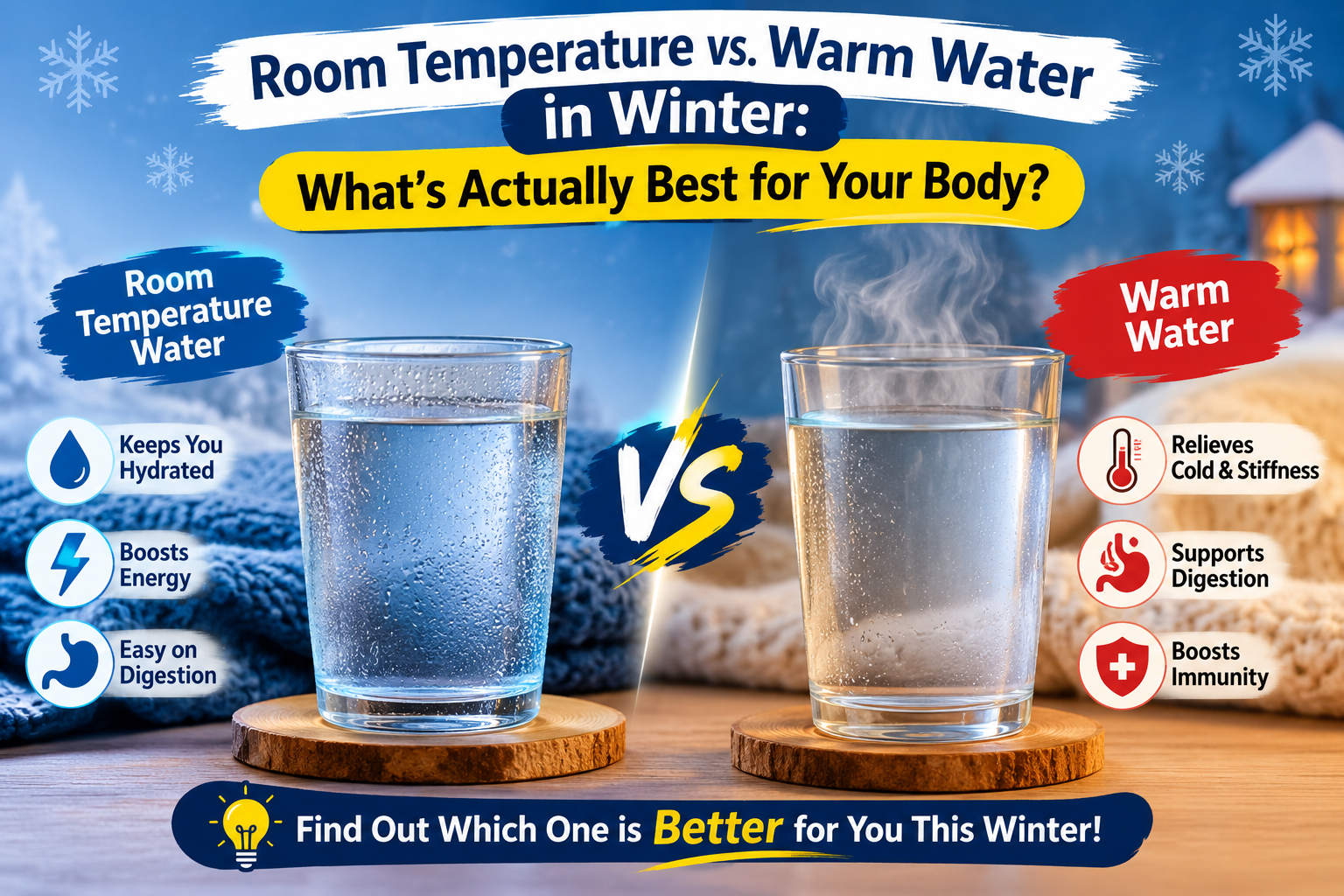
As winter arrives, our daily habits naturally begin to change. We prefer warm meals, hot beverages, cozy blankets, and comfortable indoor temperatures. Even something as simple as drinking water can become a seasonal decision. While many people prefer warm or lukewarm water during colder months, others continue drinking water at room temperature.
But does the temperature of the water you drink really make a difference to your health?
Is warm water better for digestion? Does room-temperature water provide better hydration? Can drinking cold water during winter make you sick? And most importantly, which option is actually best for your body?
The truth is that both room-temperature and warm water can help keep your body hydrated. The biggest factor is not the temperature but how much water you drink throughout the day. However, water temperature can influence comfort, drinking habits, and how your body responds to certain situations.
Let’s explore the differences between room-temperature and warm water, their potential benefits, common myths, and how to choose the right option for your body during winter.
1. Why Does Staying Hydrated Matter More in Winter?
Most people associate dehydration with summer because of sweating, high temperatures, and increased fluid loss. However, dehydration can also happen during winter.
In fact, colder weather can make it easier to overlook your body’s hydration needs.
Here are a few reasons why staying hydrated is important during winter:
Reduced Thirst: Cold weather may reduce your natural sensation of thirst. As a result, you might drink less water without realizing that your body still needs fluids.
Dry Indoor Air: Heaters and indoor heating systems can reduce humidity, contributing to dry skin, dry lips, and throat discomfort.
Fluid Loss Through Breathing: During winter, we often breathe in cold, dry air. Your body warms and humidifies this air, resulting in some water loss through respiration.
Heavy Clothing and Physical Activity: Wearing multiple layers and exercising indoors can still cause sweating, even when outdoor temperatures are low.
Water supports several essential bodily functions, including:
- Regulating body temperature.
- Supporting digestion and nutrient absorption.
- Transporting nutrients throughout the body.
- Helping kidneys remove waste products.
- Maintaining normal blood circulation.
- Supporting joint lubrication.
- Preventing constipation associated with inadequate fluid intake.
Therefore, maintaining good hydration should remain a priority throughout the year, regardless of the weather.
2. Benefits of Drinking Room-Temperature Water in Winter
Room-temperature water is generally water that is neither chilled nor heated. It is usually close to the surrounding indoor temperature.
Although it may not feel as comforting as warm water on a cold morning, it offers several benefits.
A. Supports Everyday Hydration
The most important benefit of room-temperature water is that it provides the hydration your body needs.
Your digestive system does not require water to be warm to absorb it. Water at room temperature can effectively contribute to your daily fluid intake.
If you prefer room-temperature water, there is no health-related reason to switch to warm water simply because winter has arrived.
B. Easy to Include in Your Daily Routine
Room-temperature water is convenient because you do not need to heat it before drinking.
You can keep a clean water bottle at your desk, bedside table, or workplace and drink throughout the day.
This convenience can make it easier to maintain consistent hydration habits.
C. Suitable for Most Everyday Situations
Room-temperature water is a practical choice after meals, during work, while travelling, and throughout the day.
It is also a comfortable alternative for people who find hot beverages or warm water unpleasant.
D. Avoids Unnecessary Heating
Room-temperature water does not require boiling or heating, making it a simple and energy-efficient option.
However, always ensure that your drinking water comes from a safe and clean source.
3. Benefits of Drinking Warm Water in Winter
Warm water is a popular winter choice, particularly in households where people prefer starting their mornings with a glass of lukewarm water.
While warm water is not a magical health remedy, it can offer several practical benefits.
A. Provides Comfort During Cold Weather
One of the most noticeable benefits of warm water is comfort.
Drinking lukewarm water can feel soothing when the weather is cold, especially after waking up in the morning or returning home from outdoors.
It may also feel more pleasant for people who dislike drinking cool water during winter.
B. May Help Soothe a Dry or Irritated Throat
Warm liquids can provide temporary relief from throat irritation and discomfort.
When you have a mild cold, a dry throat, or a cough, warm water may feel soothing.
It can also help loosen mucus and make throat discomfort more manageable.
However, warm water does not cure a cold or eliminate the virus responsible for an infection.
C. Can Support Comfortable Digestion
Some people find warm water more comfortable to drink after meals.
Drinking enough water throughout the day supports normal digestion and helps prevent constipation.
Warm water may also feel soothing for people who experience mild digestive discomfort.
However, there is limited scientific evidence that warm water significantly improves digestion compared with room-temperature water.
The important factor is maintaining adequate fluid intake.
D. Encourages Better Hydration Habits
This is perhaps one of the biggest practical advantages of warm water during winter.
Many people naturally reduce their water intake when temperatures drop because drinking cold water feels uncomfortable.
If switching to lukewarm water encourages you to drink more regularly, it can be a useful habit.
E. Offers a Relaxing Morning Routine
Starting your day with a glass of warm water can become a simple wellness ritual.
It gives you an opportunity to hydrate after several hours of sleep and establish a healthy morning routine.
Remember, the benefits come primarily from hydration and consistency rather than any special detoxifying property of warm water.
4. Room-Temperature Water vs. Warm Water: Key Differences
Both options contribute to hydration, but they differ in comfort and everyday use.
| Comparison | Room-Temperature Water | Warm Water |
|---|---|---|
| Hydration | Effective | Equally effective |
| Winter Comfort | Comfortable for many people | Often more comforting |
| Digestion | Supports normal digestion | May feel soothing |
| Throat Comfort | Generally neutral | Can temporarily soothe irritation |
| Morning Routine | Easy and convenient | Popular morning option |
| Preparation | No heating required | Requires warming |
| Daily Consumption | Suitable throughout the day | Suitable throughout the day |
| Health Benefits | Supports normal body functions | Similar hydration benefits |
The verdict: Neither option is universally superior. Both are healthy choices, provided the water is safe to drink and consumed at a comfortable temperature.
5. Does Warm Water Improve Digestion More Than Room-Temperature Water?
This is one of the most common questions people ask during winter.
You may have heard that drinking warm water after meals improves digestion, melts accumulated fat, or helps food move faster through the digestive system.
But how much of this is scientifically supported?
Water is essential for digestion. It helps break down food, supports nutrient absorption, and keeps stool soft, making bowel movements easier.
However, there is no strong scientific evidence that warm water provides significantly better digestive benefits than room-temperature water.
Some people may find warm water more comfortable after eating, but this does not mean it is medically superior.
If you experience regular constipation, focus on:
- Drinking sufficient fluids throughout the day.
- Eating fibre-rich foods such as fruits, vegetables, and whole grains.
- Staying physically active.
- Maintaining regular meal timings.
- Getting adequate sleep.
If digestive problems persist, consult a healthcare professional rather than relying on water temperature alone.
6. Can Drinking Cold Water in Winter Make You Sick?
Many people believe that drinking cold water during winter causes colds, coughs, or throat infections.
However, this is a common misconception.
The common cold is caused by viruses, not by drinking cold water.
Drinking cold water does not directly cause viral infections. Your risk of catching a cold is more closely related to exposure to respiratory viruses and close contact with infected individuals.
That said, cold water may feel uncomfortable if you already have a sore throat, cough, or throat sensitivity.
In such situations, warm or room-temperature water may be a more comfortable choice.
There is no need to completely avoid cold water during winter if you enjoy it and it does not cause discomfort.
7. Does Warm Water Help with Weight Loss?
Another popular belief is that drinking warm water early in the morning burns fat and helps people lose weight faster.
While drinking water can support weight-management efforts, its temperature does not have a significant fat-burning effect.
Here is how water can indirectly support weight management:
May Help Manage Appetite: Drinking water before meals may help some people feel fuller and reduce unnecessary snacking.
Supports Physical Performance: Proper hydration helps maintain energy levels and supports normal physical activity.
Replaces High-Calorie Drinks: Choosing plain water instead of sugary beverages can reduce overall calorie intake.
Supports Normal Metabolism: Water is involved in several metabolic processes, although drinking warm water does not create a meaningful weight-loss advantage over room-temperature water.
If your goal is weight loss, focus on a balanced diet, regular exercise, sufficient sleep, and consistent hydration rather than relying on a particular water temperature.
8. What Is the Best Time to Drink Warm or Room-Temperature Water in Winter?
There is no strict schedule that everyone needs to follow. However, the following routine can help you maintain hydration throughout the day.
Morning: After Waking Up
Start your day with one glass of room-temperature or lukewarm water.
This helps replenish fluids after several hours of sleep.
Before or Between Meals
Drink water according to your thirst and comfort.
You do not need to avoid drinking water before meals or follow a complicated hydration schedule.
Afternoon: During Work
Keep a water bottle nearby and take regular sips.
This is particularly helpful if you spend long hours working indoors or forget to drink water.
Evening: After Physical Activity
If you exercise, walk, or participate in outdoor activities, replace the fluids lost through sweating.
Room-temperature water or comfortably warm water can both work.
Before Bedtime
You can drink a small amount of water if you feel thirsty.
However, avoid drinking excessive amounts immediately before sleeping if it frequently interrupts your sleep with nighttime bathroom visits.
9. How Much Water Should You Drink Daily During Winter?
There is no single daily water requirement that applies to everyone.
Your hydration needs depend on several factors, including:
- Age and body size.
- Physical activity.
- Climate and temperature.
- Diet and salt intake.
- Pregnancy or breastfeeding.
- Medical conditions and medications.
A commonly referenced guideline from the U.S. National Academies suggests approximately 3.7 litres of total water daily for men and 2.7 litres for women. These amounts include water from all beverages and food, not just plain drinking water.
Your individual needs may be higher or lower.
Fruits, vegetables, soups, milk, and other beverages also contribute to your daily fluid intake.
A simple way to monitor hydration is to pay attention to thirst and urine colour. Pale yellow urine generally indicates adequate hydration, although vitamins, medications, and medical conditions can affect its colour.
People with kidney, heart, or liver conditions who have been advised to restrict fluids should follow their healthcare professional’s recommendations instead of general hydration targets.
10. Common Mistakes to Avoid When Drinking Water in Winter
Even if you drink water regularly, certain habits can affect your hydration routine.
Here are some common mistakes to avoid:
- Drinking Water Only When You Feel Thirsty: Thirst is useful, but it may not always be the best indicator of your hydration needs, particularly for older adults.
- Replacing Water Entirely With Tea or Coffee: Tea and coffee contribute to fluid intake, but excessive caffeine or added sugar may not be ideal. Include plain water in your routine.
- Drinking Extremely Hot Water: Water that is too hot can burn your mouth, tongue, and throat. Always allow it to cool to a comfortable temperature.
- Ignoring Hydration During Indoor Work: Heated rooms can contribute to dry indoor conditions. Keep water accessible even when you are not outdoors.
- Following Unverified Health Claims: Warm water does not detoxify your body, melt belly fat, or cure infections. Your liver and kidneys perform the body’s natural waste-processing functions.
- Ignoring Medical Advice: People with certain health conditions may need personalised fluid recommendations.
11. Practical Tips to Stay Hydrated Throughout Winter
Building a consistent hydration routine does not have to be complicated.
Try these simple tips:
- Start your morning with a glass of lukewarm or room-temperature water.
- Keep a reusable water bottle within reach.
- Drink water regularly instead of consuming large amounts all at once.
- Include water-rich fruits and vegetables in your meals.
- Enjoy homemade soups as an additional source of fluids.
- Choose warm water if it makes drinking easier during cold weather.
- Monitor your hydration through thirst and urine colour.
- Drink additional fluids when exercising or sweating.
- Use clean, safe drinking water.
- Avoid making hydration unnecessarily complicated.
Small daily habits can make a meaningful difference to your overall hydration.
Frequently Asked Questions (FAQs)
Not necessarily. Both provide effective hydration. Warm water may feel more comfortable during cold weather, but it does not offer proven overall health advantages over room-temperature water.
You can if you enjoy it. Drinking water after waking up helps replenish fluids lost overnight. However, it does not need to be warm, and there is no requirement to drink it on an empty stomach.
No. Warm water does not directly burn belly fat. Weight loss depends primarily on maintaining a suitable calorie balance through diet and physical activity.
Yes. Drinking room-temperature water after meals is generally safe and does not interfere with normal digestion.
No. Cold water does not directly cause colds or respiratory infections. However, you can choose warmer water if cold water causes discomfort.
Yes, comfortably warm liquids may temporarily soothe throat irritation and provide relief. However, they do not treat the underlying cause of an infection.
Yes, provided it is at a comfortable temperature and safe to drink. Avoid excessively hot water that could cause burns.
Conclusion: Which Is Actually Best for Your Body?
When comparing room-temperature water and warm water in winter, the answer is surprisingly simple: the best water is the one that helps you stay consistently hydrated.
Room-temperature water is convenient, effective, and suitable for everyday consumption. Warm water offers additional comfort during colder weather and may feel soothing when you have a dry or irritated throat.
However, neither option is a miracle solution for digestion, weight loss, or detoxification.
Instead of worrying too much about water temperature, focus on drinking enough fluids, eating a balanced diet, staying physically active, and maintaining healthy daily habits.
If warm water encourages you to drink more during winter, make it part of your routine. If you prefer room-temperature water, there is absolutely no reason to change.
Remember: Your body needs proper hydration in every season. Consistency matters far more than temperature!